25 Red Cedar Trees Planted Along a Busy Roadside Corridor
Road work zones are rough on soil. All that grading, foot traffic, and equipment movement strips away vegetation and leaves exposed ground vulnerable to runoff and erosion. That's exactly the kind of situation where doing something smart early saves a lot of headaches later.
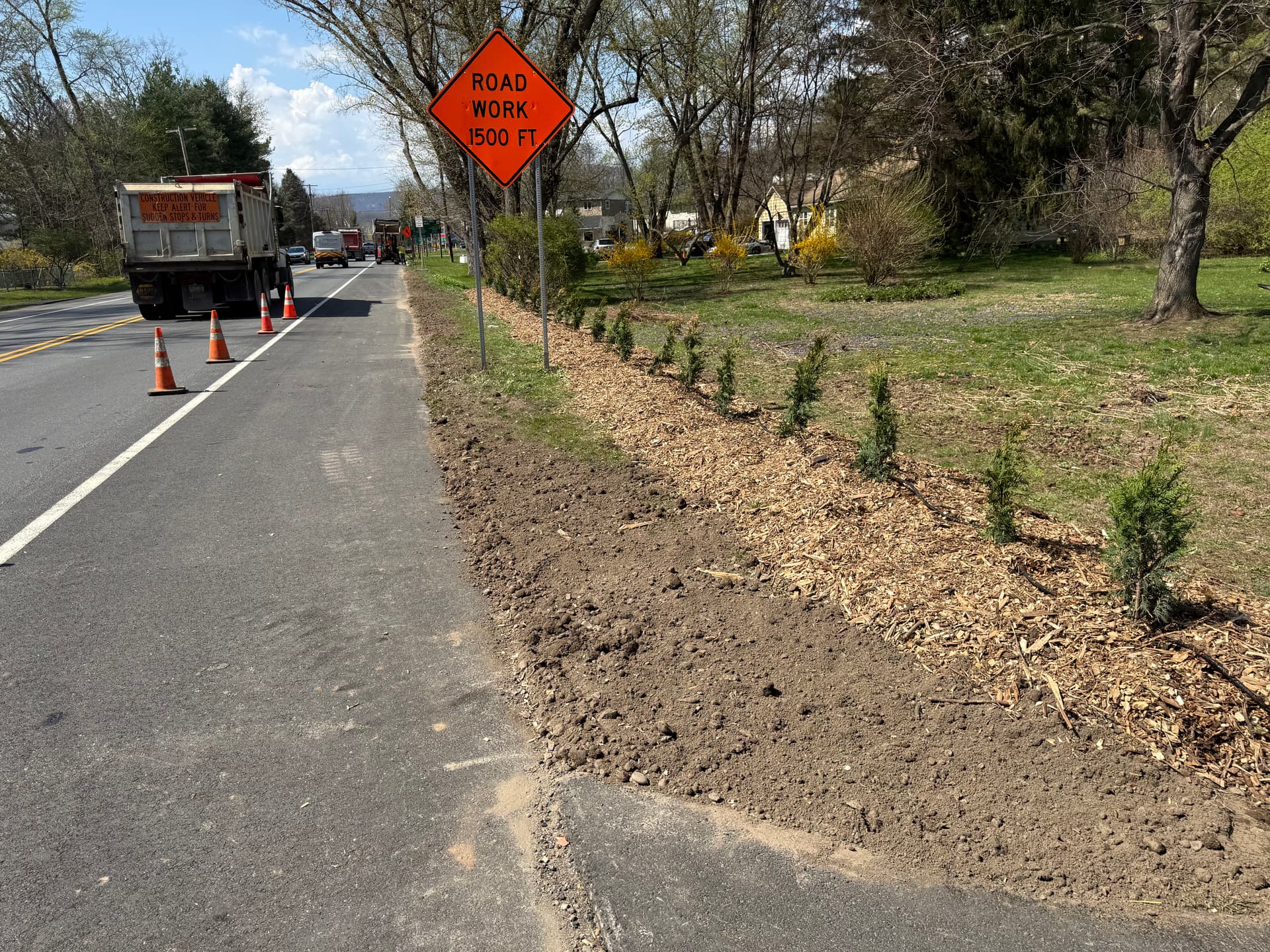
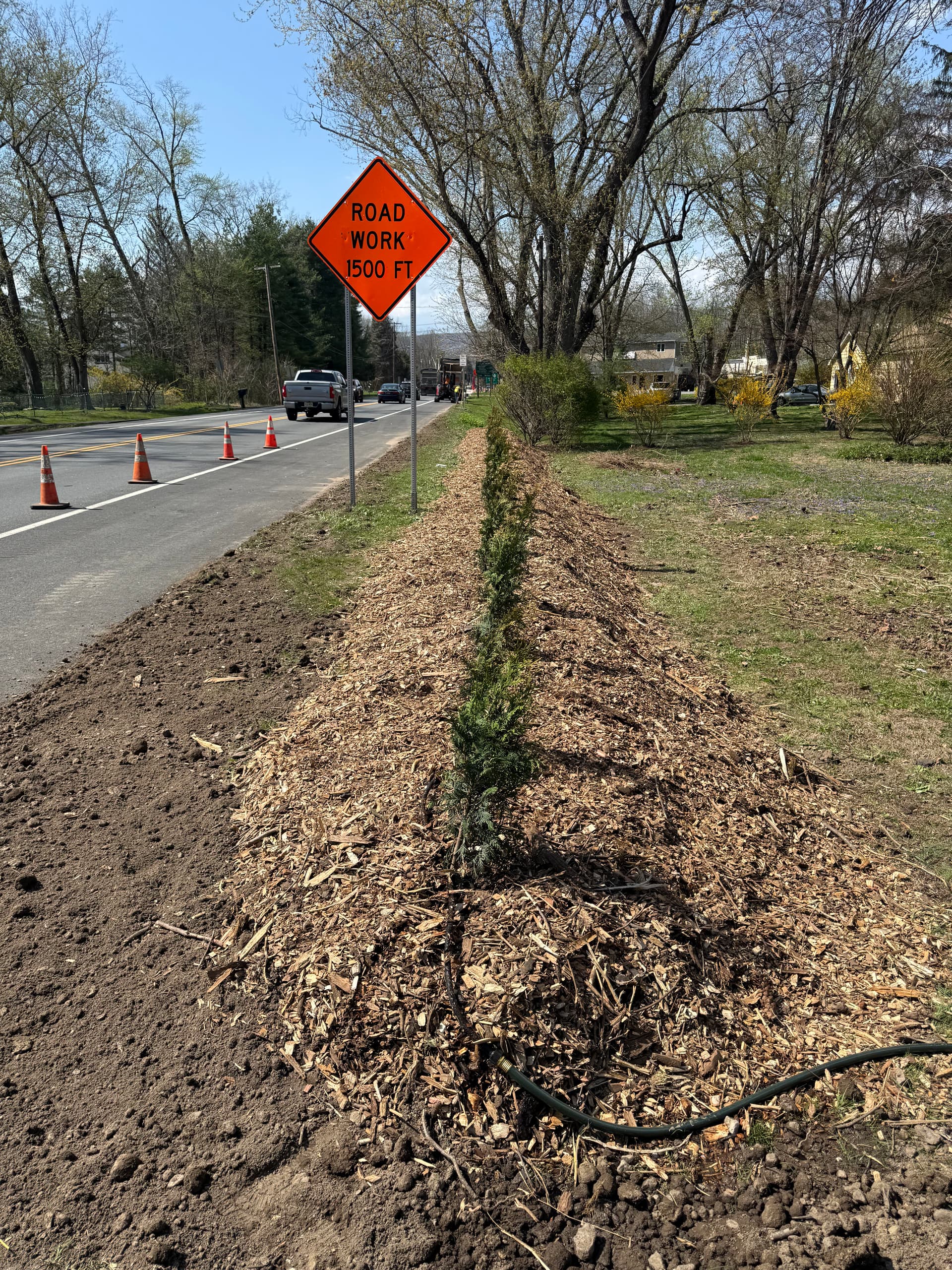
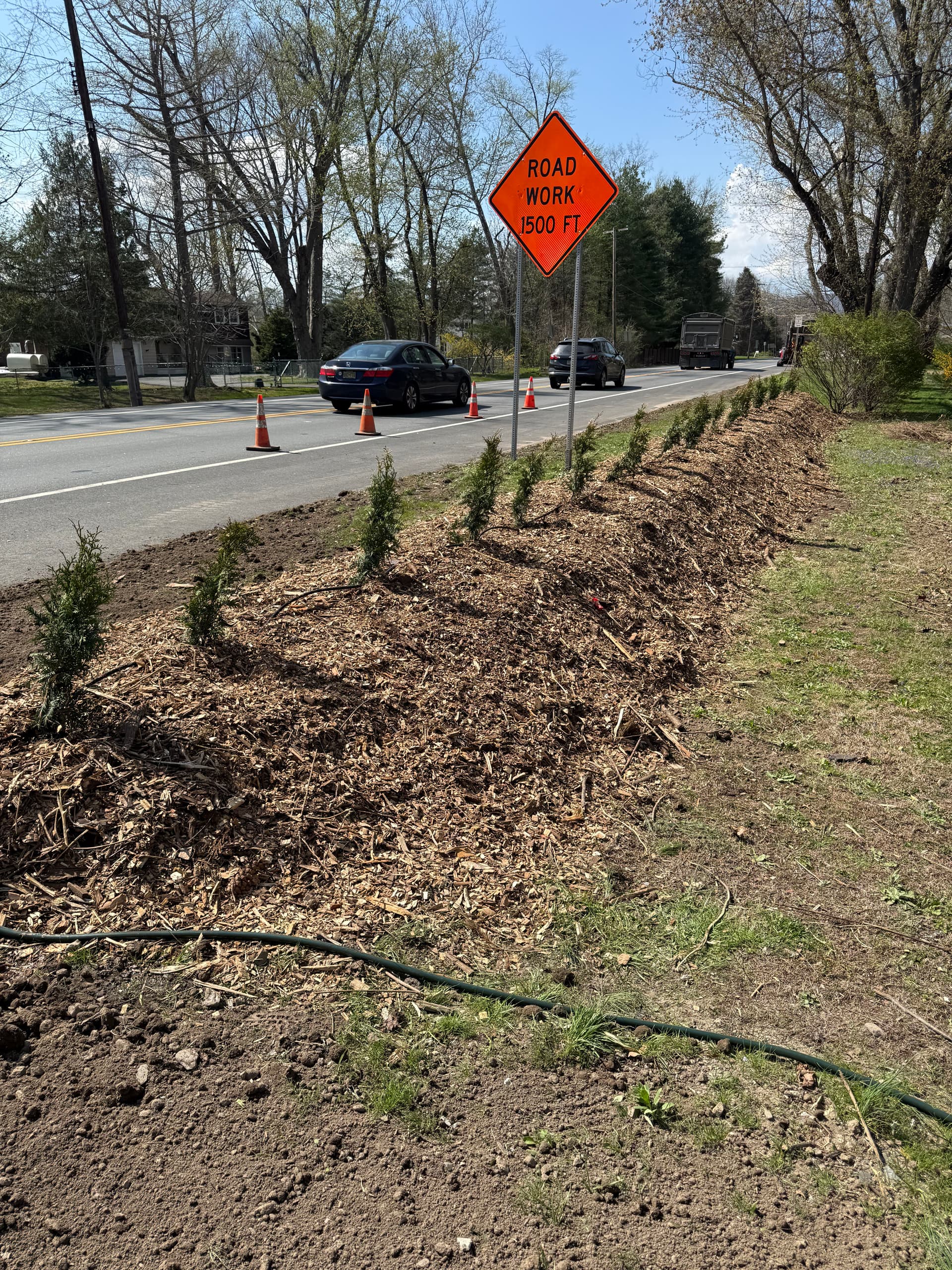
We planted 25 northern west spire red cedar trees along this roadside corridor, each one starting at 3 feet tall. These are narrow, columnar trees - great for tight linear spaces like road shoulders where you need consistent coverage without things spreading out of control. Right now they look modest. Give them time. These cedars will reach 25 feet, forming a dense green wall that holds soil, buffers the road, and adds real structure to a corridor that currently has none.
We didn't just plant and walk away. An irrigation system with a timer went in alongside the trees to make sure they get consistent moisture while their root systems develop. Establishment is the hardest part for any new planting, especially in a high-stress environment like a road shoulder. Cutting that stress down with reliable watering gives these trees a fighting chance to take hold quickly.
This is what erosion control and soil stabilization actually looks like in practice - not just straw mats and silt fences, but long-term, living solutions that grow stronger every year. The mulch bed laid between the trees holds moisture, reduces compaction, and keeps weeds from competing with the young root systems. Every piece of this has a purpose.
The small investment made now - trees, mulch, drip line - pays off for decades. By the time these cedars hit full height, they'll be doing serious work: anchoring soil, slowing runoff, and greening up a stretch of road that was nothing but bare dirt not long ago.